The packing notebook
Measure first. Pack with purpose.
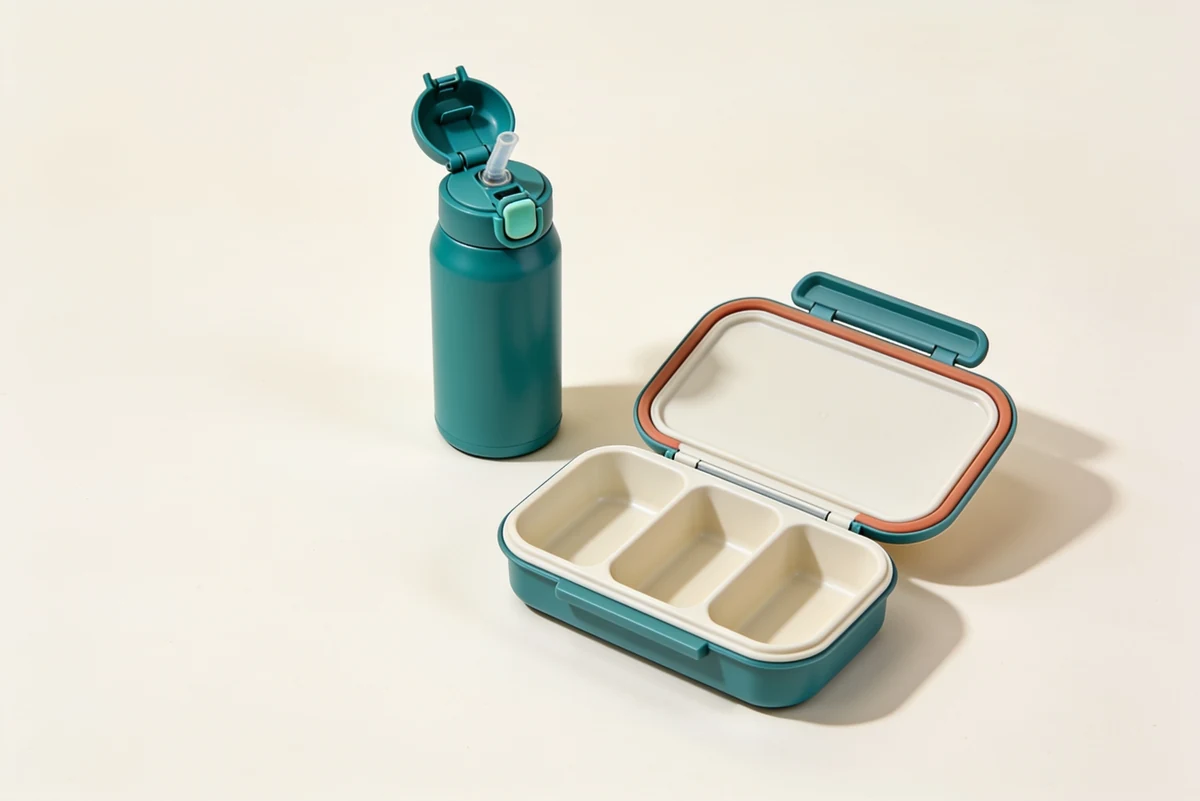
Measure the opening, not just the bag.
Open the bag and measure the clear inside width, depth and height in millimetres. A tapered base, padded divider or narrow zip opening can reduce the space available. Write down the smallest usable measurements. The outside size of the bag is not the same as the space a container can occupy.
Give bottles their own test.
For a side pocket, compare diameter first. Creek Flip measures 65 mm across and 180 mm tall; Meadow Wide is 76 mm across and 205 mm tall. The larger capacity may require more width even when the body does not look much taller. Leave accessible space for the closure and carry loop. A catalogue diameter comparison is not a guarantee of real pocket fit.
Rotate a lunch box on paper.
Trace a rectangle using the box’s outer length and width. Turn it through a quarter turn to compare both orientations. Creek Three-Well measures 210 × 150 × 65 mm; Meadow Stack measures 180 × 120 × 110 mm. The stacked design takes a smaller footprint but needs more height. Allow extra clearance around clips and check that a bottle beside the box does not press on its lid.
Choose separation deliberately.
Three wells, two tiers and one removable divider solve different packing problems. Fixed wells organize small dry foods; separate tiers add vertical height; a single compartment accepts one larger item. None of these shapes alone establishes a liquid-tight seal. Read the construction note on the product record before deciding what to pack.